

CATEGORY: Little Pieces Of Life
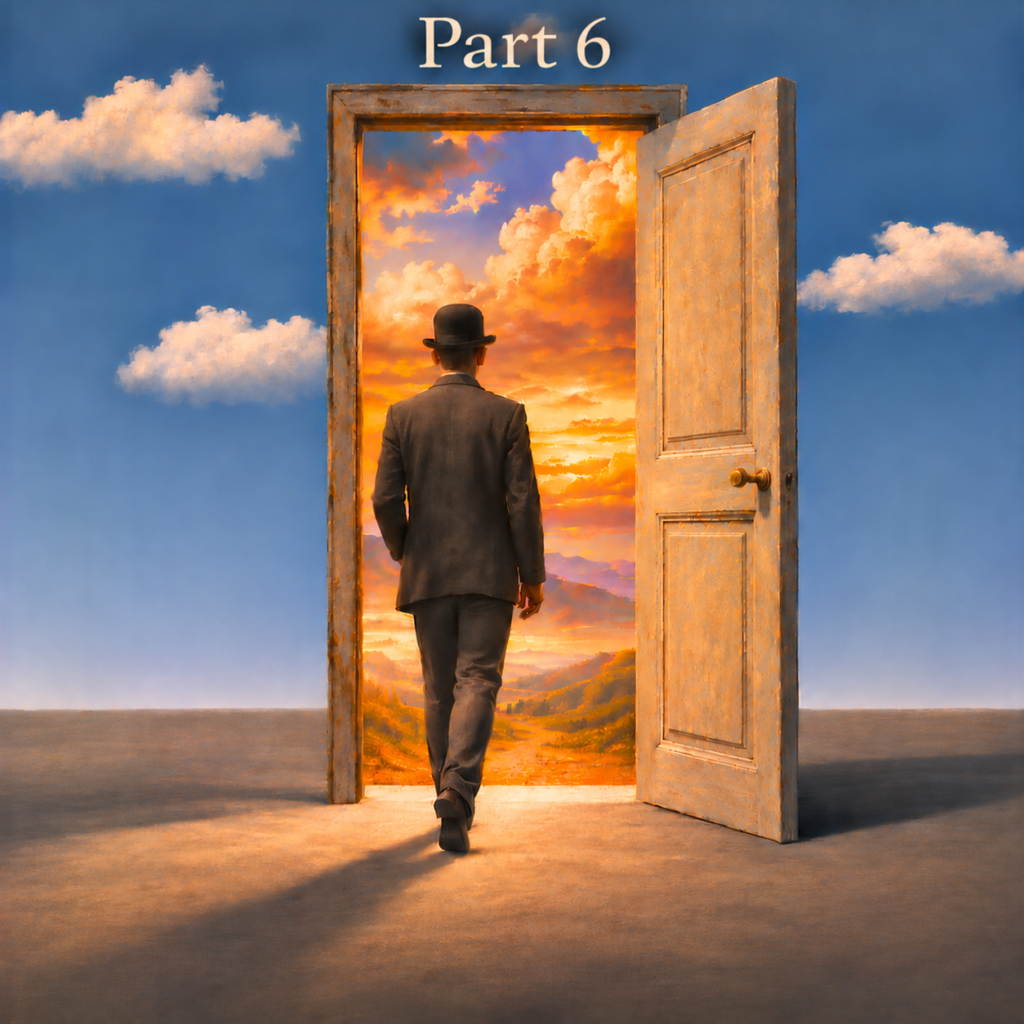
Returning to Reality
Perhaps the greatest difficulty lies not in the fact that we create imaginary stories, but in the fact that we sometimes forget that we are their creators. A thought born of desire or fear may, over time, acquire the weight of a personal truth. We return to it, enrich it with details, search for events that seem to confirm it and gradually begin to see people and situations through its lens. This is not necessarily a conscious attempt to distort reality. Often, it is a way of bringing coherence to what we feel, explaining something we do not understand or coping with the uncertainty of a situation. The more emotionally invested we become in a story, however, the more difficult it may be to recognise that certain elements of it do not come from what actually happened, but from what we assumed had happened or would happen.
Returning to reality is not always a pleasant experience. It may require us to part with an image that offered us comfort, to recognise that someone does not feel what we had hoped they would or to accept that a relationship does not hold the possibilities we had attributed to it. At other times, we may need to question a story we created out of fear and acknowledge that another person’s intentions are not necessarily those we had imagined. In both cases, there is something in common: we are called upon to relinquish the security of an inner certainty and encounter the uncertainty of real life. For even an unpleasant scenario may feel more familiar than a situation whose outcome remains unknown.
Let us return for a moment to the people we encountered in the previous stories. To the woman who believed that meeting someone new would offer her the life she had always desired. To the man who took it upon himself to help his partner overcome her difficulties, believing that his love would be enough to change her. To the man who spent an entire afternoon preparing himself for an abandonment that had not occurred. None of them created their story without reason. Behind their expectations and fears were personal needs, previous experiences and desires that held a significance of their own. The question is not whether they should have felt differently. It is whether they could have recognised the moment when their personal story began to determine the way they perceived and responded to the other person.
The woman who dreamed of a different life might, at some point, have asked herself whether her desire for greater freedom truly depended on that man’s presence. Perhaps she would have discovered that she could travel, change her habits or explore new experiences regardless of how their relationship developed. The man who had assumed the role of saviour might have recognised that caring for his partner did not give him the right to determine the course of her life. He could have continued to love her without regarding every difficulty she encountered as a personal failure. And the man who feared abandonment might have been able, before reacting, to distinguish between the actual delay of a telephone call and the story of rejection he had created around it. None of these changes would automatically have erased their desires or fears. They would, however, have allowed them to stop treating every inner image as a reality that others were obliged to confirm or disprove.
There is something particularly demanding about getting to know another person without constantly trying to fill in what we do not yet know about them. At the beginning of a relationship, these gaps are inevitable. We have not yet had the opportunity to discover how the other person responds to difficulties, what hurts them, which needs they struggle to express or how they understand love. Our imagination can easily fill these unknown spaces with images that reflect our desires. As the relationship develops, however, the other person gradually reveals their true character. They may pleasantly surprise us, disappoint us or turn out to be different from what we had expected. Truly getting to know someone requires us to allow them to show us who they are, even when this means reconsidering the image we had created. We cannot genuinely know another person if we insist on recognising them only through the qualities we have already attributed to them.
Something similar happens in the way we perceive ourselves. We may have created a personal story in which we are always the ones who give, the ones who are abandoned, the ones who are never chosen or the ones who must constantly prove their worth. Over the years, these narratives may become so familiar that we struggle to recognise experiences that do not fit within them. An act of kindness may seem suspicious if we have grown accustomed to expecting rejection. A relationship based on reciprocity may make us feel uncomfortable if we have learned to feel significant only when we are needed. And an opportunity for change may frighten us if we have convinced ourselves that we are people who do not dare to take risks. Recognising these inner stories does not mean that we can abandon them overnight. It may, however, help us understand that the way we have grown accustomed to seeing ourselves does not necessarily encompass all our possibilities.
Perhaps this is why reality needs more space than we sometimes allow it. Space to surprise us, to challenge our expectations, to reveal something we had not anticipated. When we have already decided how a relationship will develop, what someone will say to us or what the outcome of an endeavour will be, we risk treating the present as nothing more than a confirmation of what we have imagined. We may not truly listen to an answer because we have already prepared our own response. We may fail to recognise a change because we expect the past to repeat itself. Or we may overlook a new possibility because it does not belong to the story we have planned for our lives. Sometimes, in order to discover what is actually happening, we need to set aside, for a moment, what we believe we already know.
This does not mean that we should stop dreaming. Imagination is what allows us to see possibilities beyond our present circumstances, to create something that did not previously exist and to seek a life more closely aligned with our desires. Without it, many human choices would never have been made. The difference perhaps lies in the way we relate to what we imagine. We can desire a relationship without taking the other person’s feelings for granted. We can hope for change without treating it as a certainty. We can recognise a fear without immediately turning it into a prediction. And we can make plans for the future knowing that life may lead us along different paths, some of which may prove just as meaningful as those we originally chose.
The stories we create within ourselves are not necessarily obstacles along our journey. Often, they reveal what we desire, what we fear, what we lack and what we continue to search for. They can become a source of self-knowledge, provided that we do not expect reality to follow them faithfully. For the people we encounter have their own desires, their own fears and their own stories, which do not always coincide with ours. And life, however much we try to predict its course, always retains the ability to surprise us.
Perhaps, ultimately, we do not need to abandon the scripts we create within ourselves, but rather learn to recognise them as our own creations. To be able to observe them with tenderness, to understand the desires that gave rise to them and, when necessary, to allow them to change. For however precious a story we have imagined may be, it remains only one of the possible versions of our lives. And perhaps the greatest freedom lies precisely there: in being able to dream of tomorrow without losing the ability to discover today.